On this page
In November, I was laid off from OnPay, where I’d led content for almost five years. So I’m back on the job hunt, and I’m writing about it for two reasons. Writing helps me think, and I’m hoping it’s useful to anyone else starting over. I should be upfront: creating is a different game - I won’t pretend I didn’t just ground Claude with previous articles and my voice and let it help with the heavy lifting. It’s a strange new world.
This post covers the first few weeks: what I updated, how I’m keeping track of openings without losing whole days to scrolling, and how I’ve used Claude, Anthropic’s AI assistant, along the way. Let’s start with the question I asked myself first.
Where do I start?
Mine was, “What do I actually have to show?” After years of work, some materials were spread across old resumes, a half-updated website, a LinkedIn profile, and tools I no longer have access to.
Rather than fix everything at once, I made a short list: resume, portfolio site, LinkedIn, and a way to find roles worth my time. Then I worked through it in that order, one conversation at a time.
Resume
Everything else points back to it, so it came first.
Portfolio site
jonrdavis.me, built to show the work instead of just listing it.
LinkedIn
Fixed what was out of date and added what was missing.
Job alerts
A system that brings openings to me, so I’m not scrolling all day.
Now that we have the list, let’s go through it.
The resume
I started with the resume because everything else points back to it. Claude and I reworked it for the kind of role I want: a tighter headline, bullets reordered so the most relevant work comes first, and a version tailored to each posting.
The part I cared about most was accuracy. When I wasn’t sure of a number, we left it out. When a bullet made it sound like I owned something I had only helped with, we reworded it. A resume that holds up in an interview matters more to me than one that sounds impressive on paper.
I also asked a friend, someone who reviews credentials regularly, to read the resume and make suggestions. However much I liked the format, I couldn’t be objective about my own work, and I wanted an outside perspective from someone who looks at these all the time.
The portfolio site
Next came jonrdavis.me. I wanted a site that shows the work instead of just listing it: case studies, guides, writing samples, and kind words from people I’ve worked with.
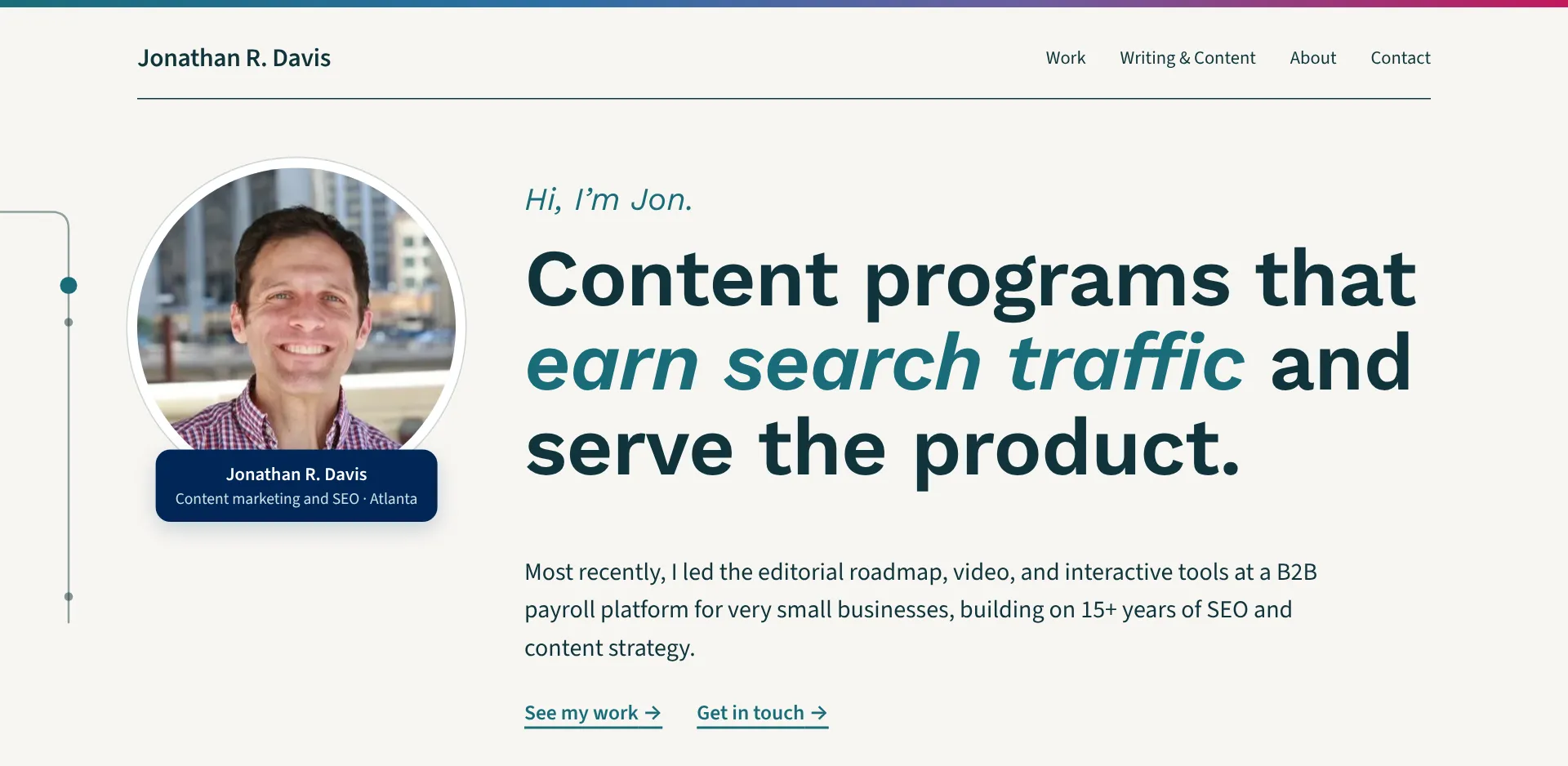
I’m a coding beginner, so I built it by describing what I wanted in plain language and reviewing what came back. Every change goes through a preview first, so I can check it on my phone before anything goes live. It’s never really finished. I think of it as always evolving, and I’m open to ideas.
Social sweep
Next I realized my profile needed some TLC (total LinkedIn cleanup). I thought there were a number of tweaks it needed during the overhaul, here are some that needed to be addressed:
- It did not include recent work I was proud of.
- There was an old landline I used at a previous role in the contact info.
- And somehow one of my volunteer experiences was missing altogether.
Refreshing it also taught me there are a lot of opportunities to spotlight work (but that said I am taking advantage of a Premium trial so we’ll see what changes as that comes to an end).
Letting openings come to me
Job boards can swallow a day. So I set up a simple system. LinkedIn emails me job alerts. A template built using Claude pulls the relevant postings from those emails into one list with a link to the listing (a couple of times it has found expired listings, which leads me to the next step). I review each one to make sure it’s still open and still a fit before I do anything with it.
That split is on purpose. Software is good at collecting. I’m better at judging whether a role is right for me.
Where I used Claude, and where I didn’t
Claude is good at structure, drafting, and catching things I’d miss. It doesn’t know my work history unless I tell it, and it shouldn’t decide what’s true about it. A couple of examples show the line.
| What | Where Claude helped | Where I stayed in charge |
|---|---|---|
| Resume | Tightened the headline, reordered bullets, and tailored a version to each posting. | Decided what’s true. Numbers I wasn’t sure of stayed out, and bullets that overstated my role were reworded. |
| Portfolio site | Turned my plain-language descriptions into the site. | Reviewed every change in a preview, including on my phone, before it went live. |
| Job alerts | Helped set up the system: LinkedIn alerts and a template that pulls postings into one list. | Check that each role is still open and still a fit before I do anything with it. |
| AI Overviews screenshot | Helped record where my article showed up. | Kept it as the eighth source, with the date and a full screenshot. No flattering crop. |
I wanted to document a place where an article I wrote showed up in Google’s AI Overviews. It appeared as the eighth source in a panel, not near the top. It would have been easy to crop that to look better. Instead, we recorded it as eighth, with the date and a full screenshot.
Two numbers I’d planned to use on my site stayed off it, too. I can’t confirm the time periods behind them now that I’ve lost access to that data. They won’t go up until I can back them.
Being precise can feel like a handicap when you’re job hunting. I’m betting it works the other way. Hiring managers read a lot of impressive claims, and a plain, checkable one stands out.
What I’d tell someone starting over
- Start with proof, not polish. Keep a running log of wins with links, dates, and screenshots. It’s much easier to write a resume from evidence than from memory.
- Decide what’s true before asking anyone, human or AI, to word it. The wording is the easy part.
- Keep yourself in the loop on decisions that matter. Let a tool collect and draft, but you decide what’s accurate and which roles are worth your time.
What’s next
I’m still working on a few things: more writing samples, examples of video I’ve scripted, and this blog, which is partly a place to practice WordPress (though at the moment I’m using Cloudflare to push these live!), the platform I used almost every day at OnPay and Cushing.
I’m curious how others are handling this. If you’ve been through a search recently, or you’re hiring, what would you want to see from a candidate? I’d like to hear it.